
Community Behavioral Health
UX Strategy/Design, Website Design + Development
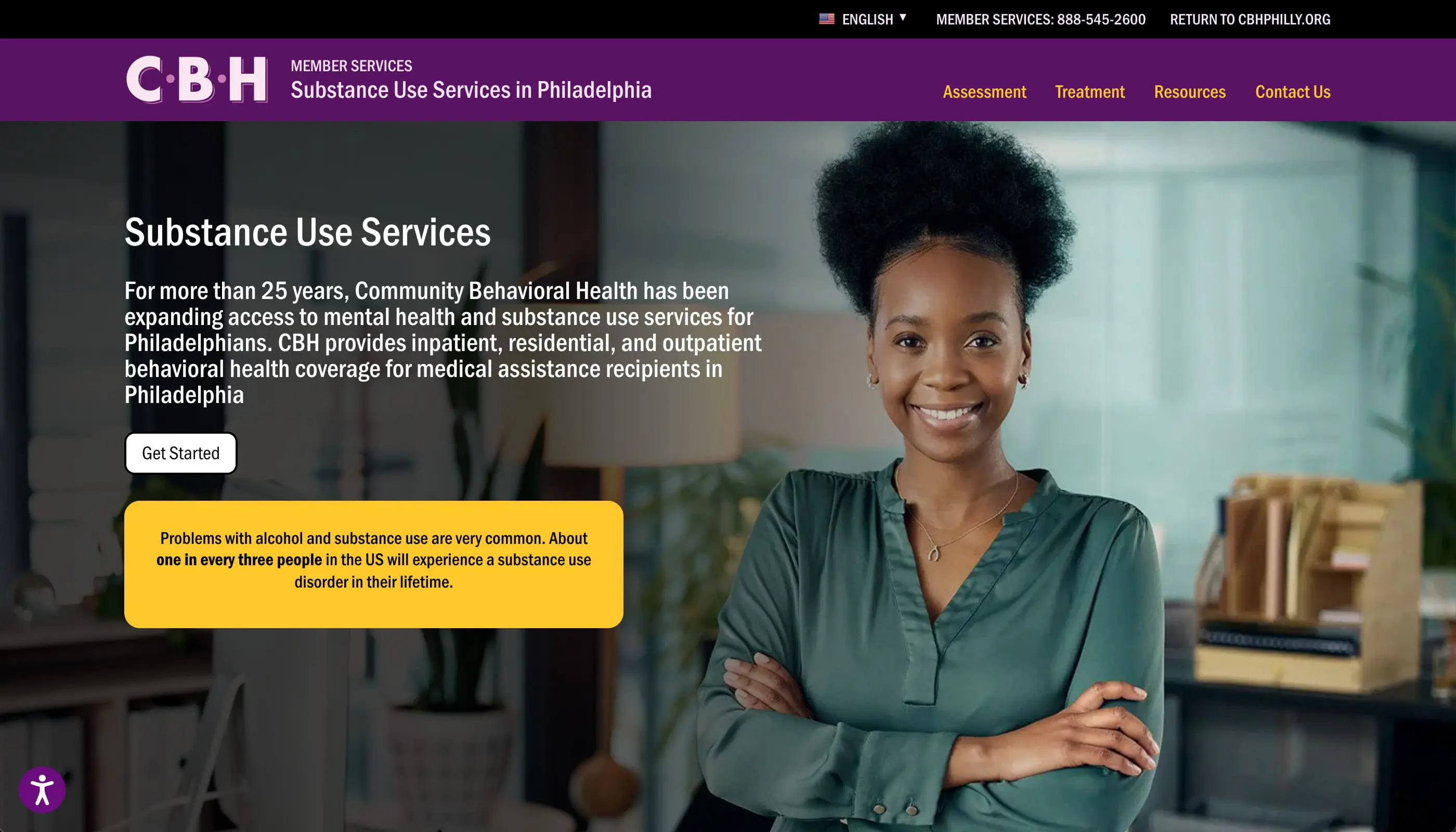
An Easy-to-Use Member Journey Online Interface for the Treatment of Substance Use Disorders
Community Behavioral Health (CBH) has expanded access to mental health services for Philadelphians for more than 25 years. Their members can receive inpatient and outpatient hospital services for behavioral health needs and substance use disorders through their network providers. Beth worked with the CBH Member Experience team to create an enhanced online experience for members seeking information and treatment options for substance use disorders.
CBH members utilized services in 2022
impact at-a-glance
Problems with alcohol and substance use are very common. About one in three people in the United States will experience a substance use disorder in their lifetime. As of 2022, there were 802,250 residents in Philadelphia (about 50% of the city’s population) who qualified for services related to substance use disorders through Community Behavioral Health. This highlights the urgent need for accessible information.
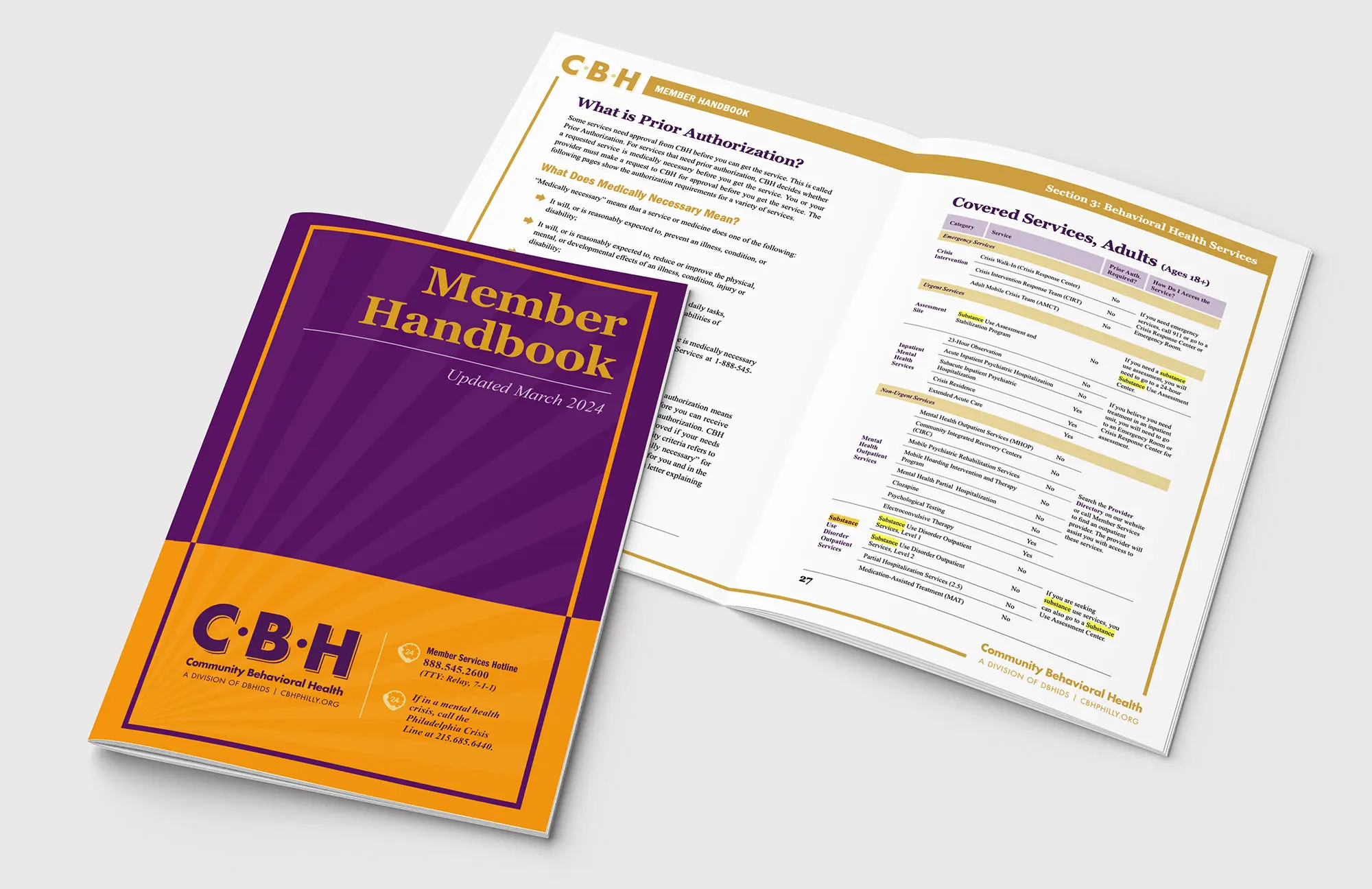
Prior to the creation of the Member Journey, CBH members could only access information on treatment services through a dense 83-page Member Handbook. While the handbook is an incredible resource of information, it poses a challenge for members trying to easily understand their access to services. Additionally, the handbook must be updated manually, causing a delay in posting updates to service guidelines and options.
Understanding the Problem
The primary CBH website—which was developed by Beth in 2022—serves as a vital tool for mental health and behavioral service providers. It functions not only as a marketing platform for the organization but also as a valuable resource for updates on provider agreements, billing changes, testing protocols, and authorization criteria. CBH’s members frequently visit the site to find information on how to access crucial services.
Member Handbook: The primary content for members is housed in the Member Handbook, an extensive 83-page document that details procedures for a range of services.
Digital Literacy: For many users, particularly those who may lack comprehensive media literacy, finding the necessary assistance can feel overwhelming due to the clinical and impersonal nature of the existing online materials.

Nearly 28,000 CBH members received treatment for Substance Use Disorders in 2022.
%
of adult members who utilized CBH services had a substance use disorder
Crafting an Effective Solution
To better serve members seeking help for specific disorders or mental health challenges, CBH needs a more effective way to communicate accessible information.
Community Behavioral Health’s Member Experience team partnered with Beth for a nearly year-long project to enhance the online experience for members seeking information on treatment options for substance use disorders.
We named this project Member Journey:
- After evaluating various possibilities, it was decided that a microsite would be integrated into the existing content management system, which the CBH staff are well-trained and proficient in using.
- The microsite would feature its own distinct on-page navigation system to improve accessibility.

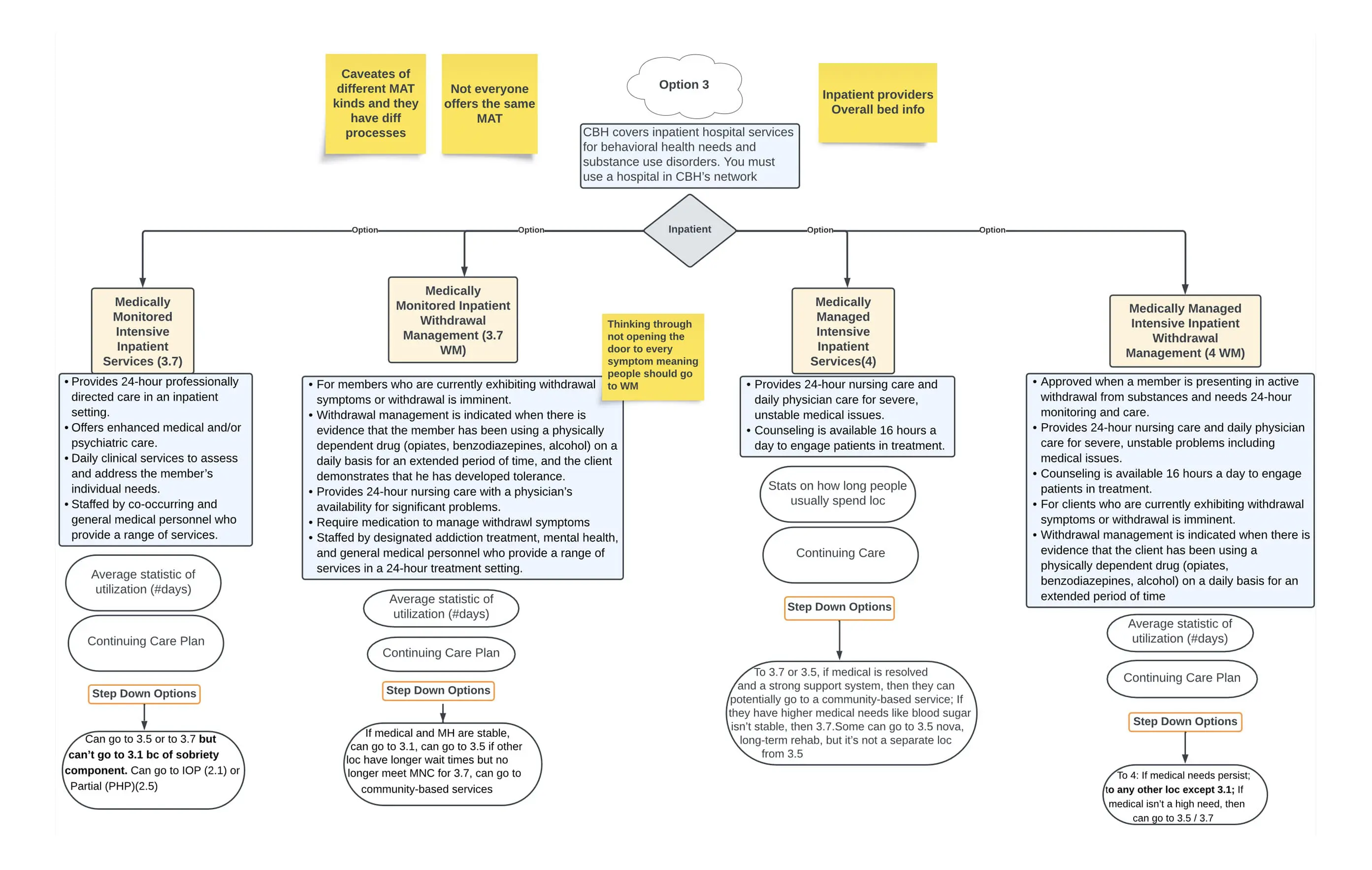
Original user flow for Inpatient Hospital Services, which is just one of three comprehensive treatment options available for CBH members.
Creating and Revising a User Flow
To enhance understanding of how members access treatment, Beth and the Member Experiences team created user flows of the original handbook materials. It was important to not only visualize the various treatment options available for members, but also any integral requirements surrounding medical approval.
Key Findings:
- There are three treatment options available to CBH members.
- Each treatment option has its own unique requiements and authorizati0on.
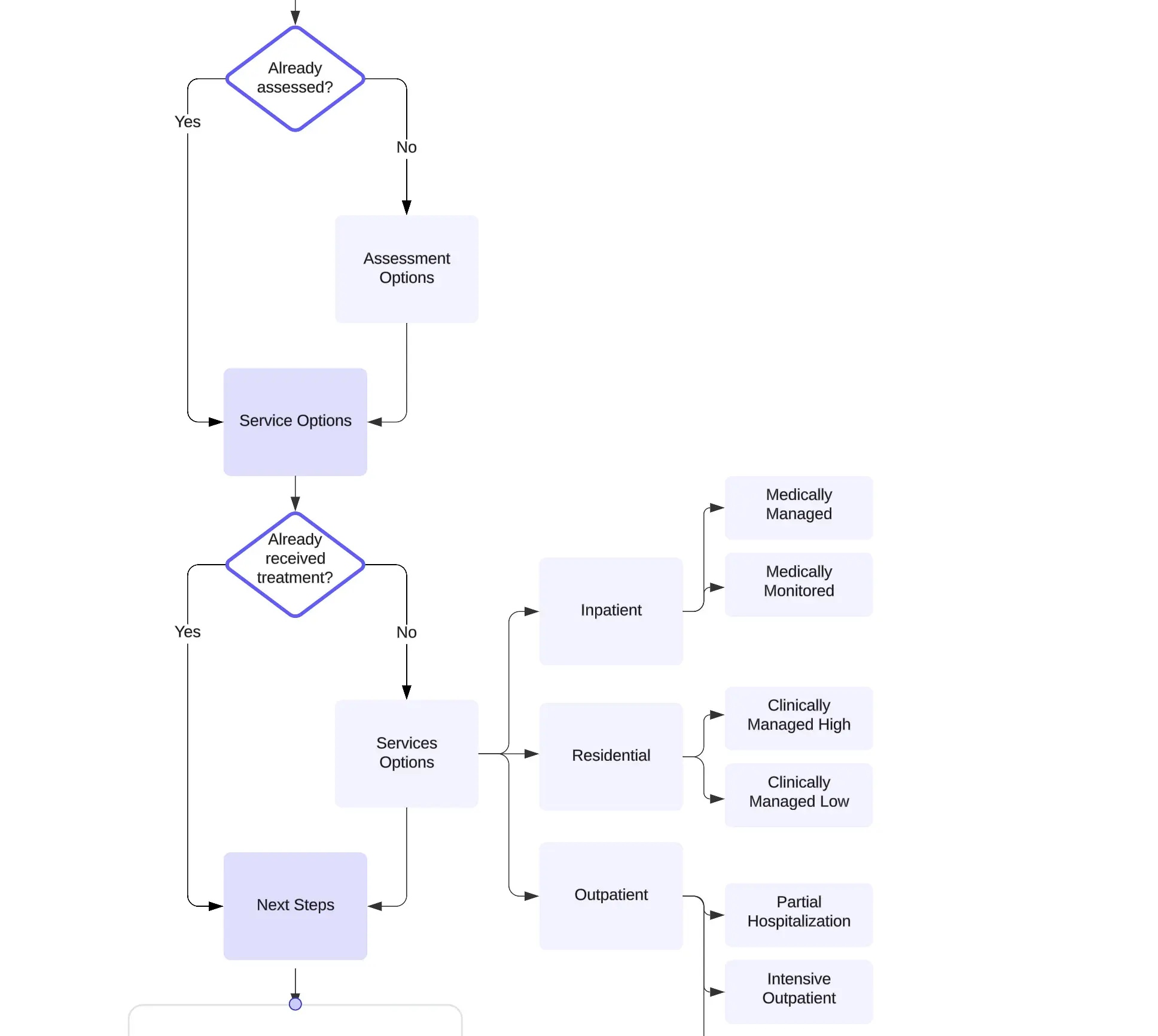
An early user journey map focused on whether or not a member had been assessed.
Establashing a Final User Flow
Mapping the user flows was a deeply iterative process. The project team identified key information for members and made suggested to stakeholders on content edits until a clear user flow was established. For example, there are three treatment options available to CBH members and each has its own unique requirements and authorizations, adding to the challenge of creating a clean visual interface.
Landing on a Single-Page Layout
After exploring a variety of solutions, the project team decided that the Member Journey should utilize a single-page layout. This would allow users to easily select treatment options, minimizing excessive content that could overwhelm them.
An early user journey map focused on whether or not a member had been assessed.
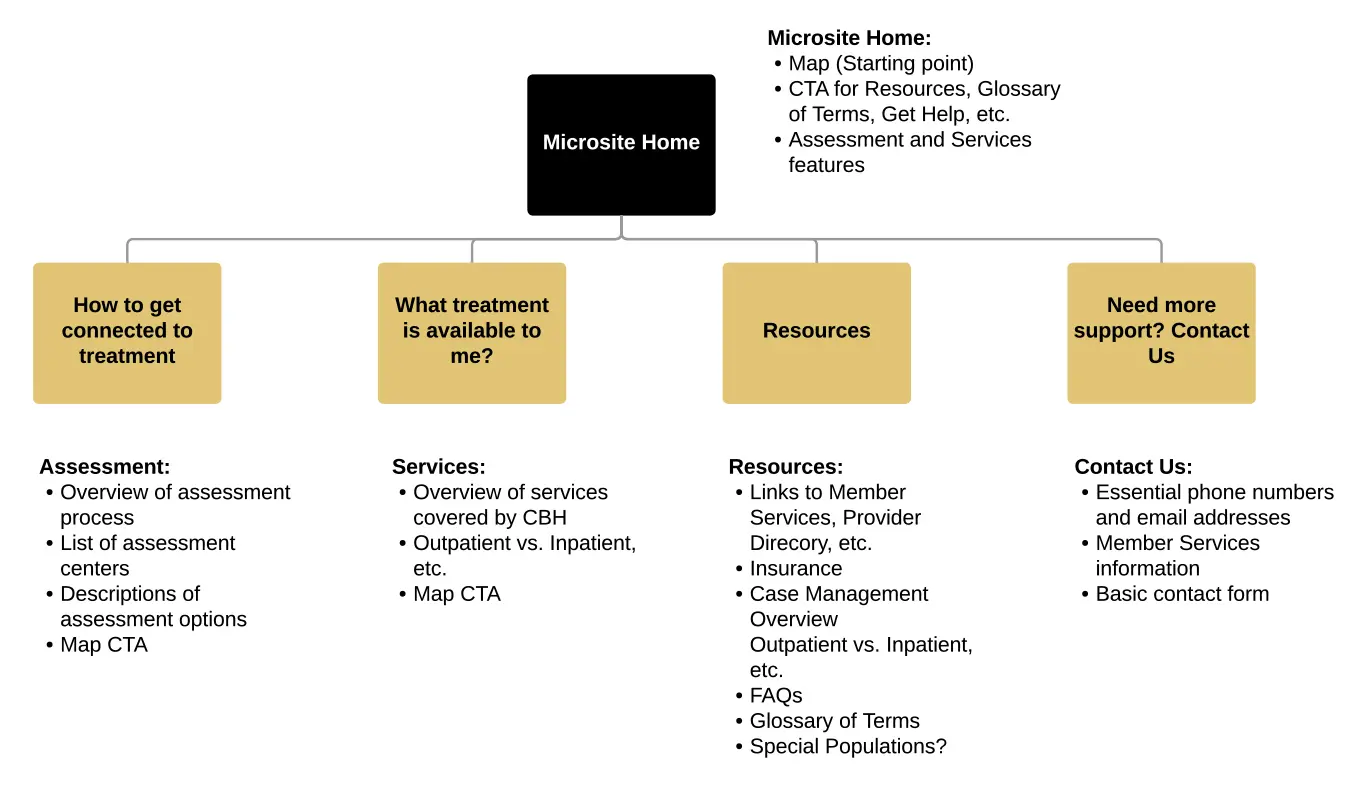
An early iteration of the sitemap for the new Member Journey microsite.
On-Screen Navigation
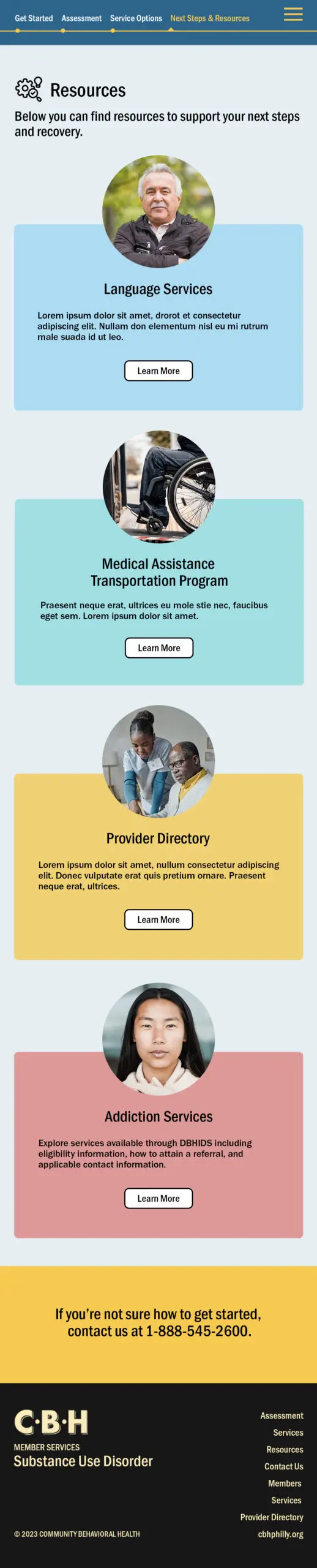
The Member Journey required its own on-page navigation which would guide users from understanding assessment requirements and available treatment all the way to next steps and population-specific options (e.g. language and transportation services).
Navigating Potential Conflicts: The global navigation for the primary CBH website would need to be accessible from the Member Journey, as well as the translation tool—a crucial tool for the diverse CBH audience—and Member Services contact information.
An Iterative Design Process
During the discovery phase, the project team identified the importance of incorporating photography and a vibrant color palette into the microsite to create a more inviting atmosphere around the clinical content. Beth explored a variety of content elements reflecting direct content from the Member Handbook. This included treatment codes and “stepping down” treatment options. However, the project team quickly determined that the inclusion of the stepping down options created a very complex user experience.
Our goal was to avoid bogging down users with excessive content.
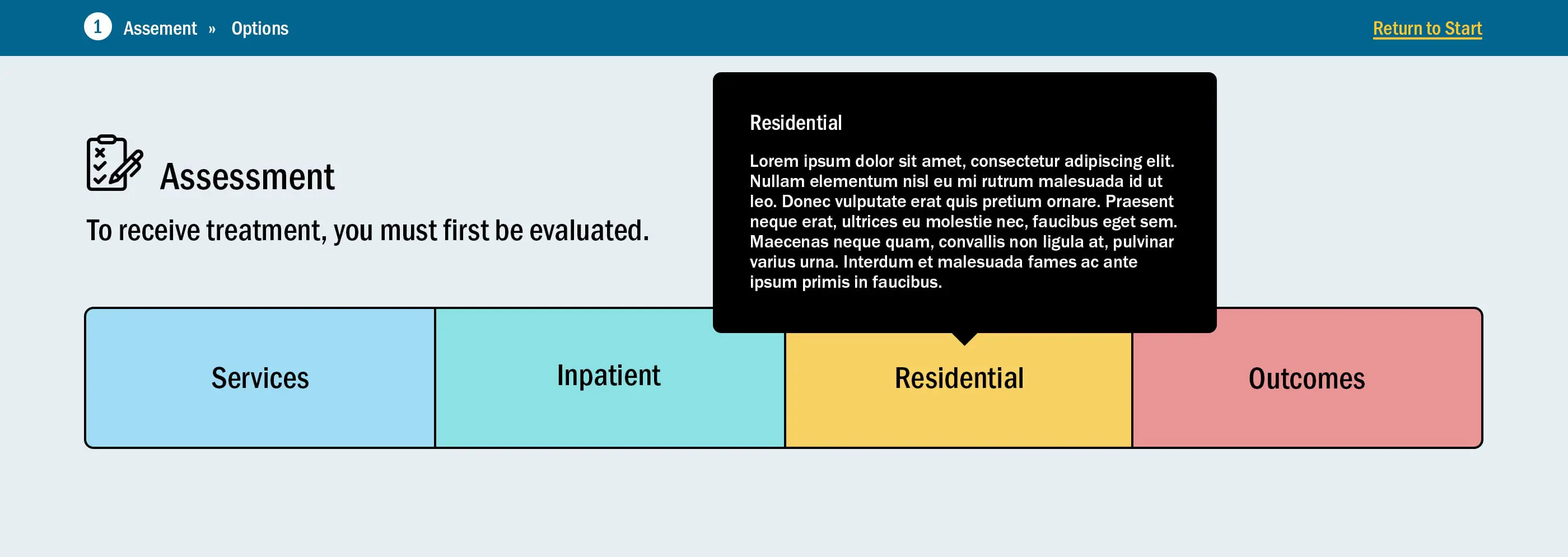
- The design stage allowed the project team to pinpoint essential content modules, such as informational boxes and tooltips, that would significantly enhance the user experience.
- The early design concepts focused on the creation of various modules to reorganize and present content.

was spent on behavioral health treatment in 2022, underscoring the continuing need for such services across the United States
Designing for the Future
The microsite was carefully developed with future iterations in mind, featuring distinct color palettes for each service area. With the aim of transforming the entire CBH Member Handbook into a user-friendly online experience, the initial design concepts were develoepd in WordPress to share design assets and content modules.
Defining Outcomes
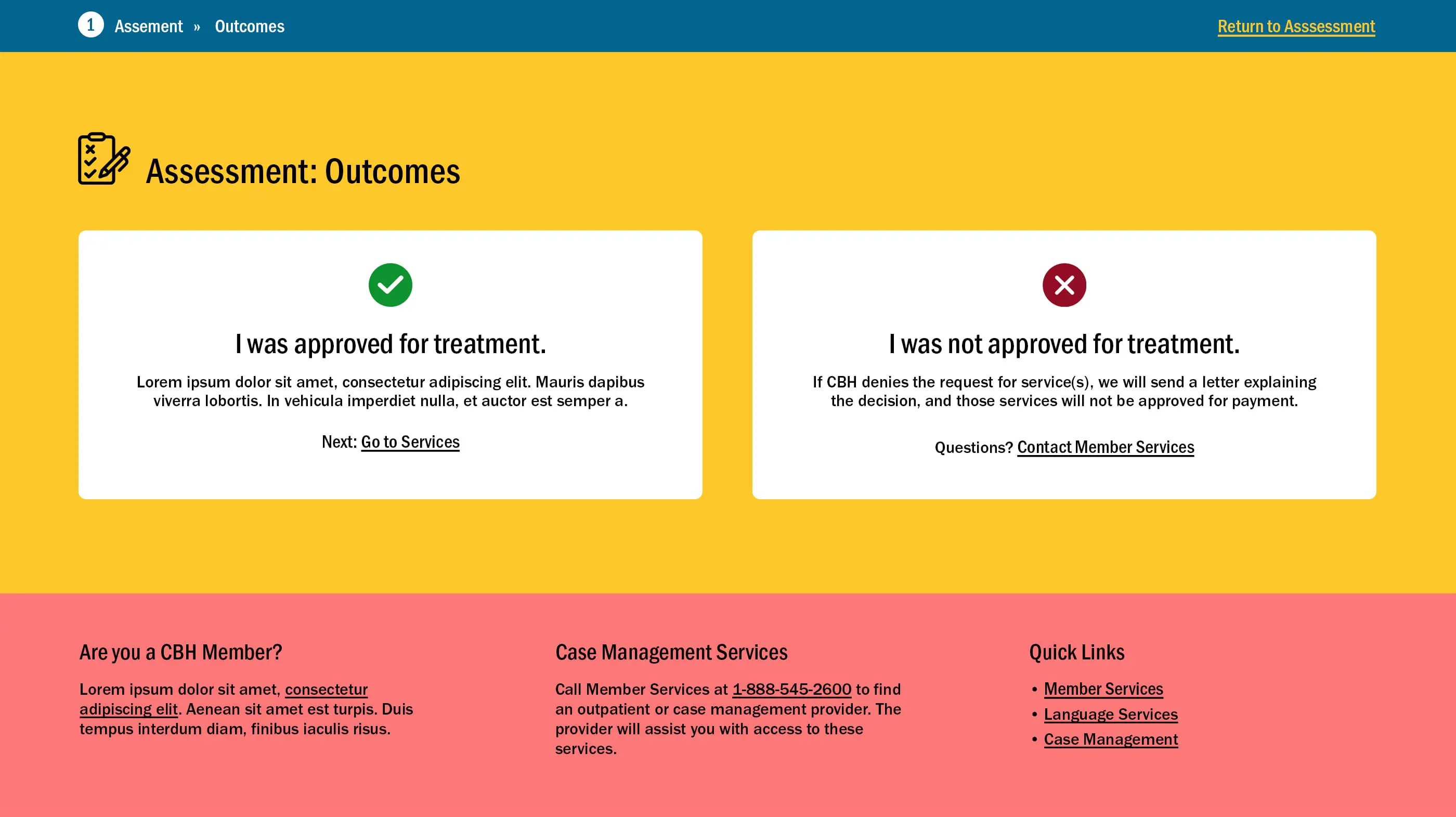
Defining desired outcomes for the Member Journey microsite was a challenge as users were not guided to complete a form, sign-up for more information or complete a transaction. The final navigation evolved to include clear next steps to ensure users would begin the process of accessing treatment, with a primary call-to-action to contact member services clearly defined.
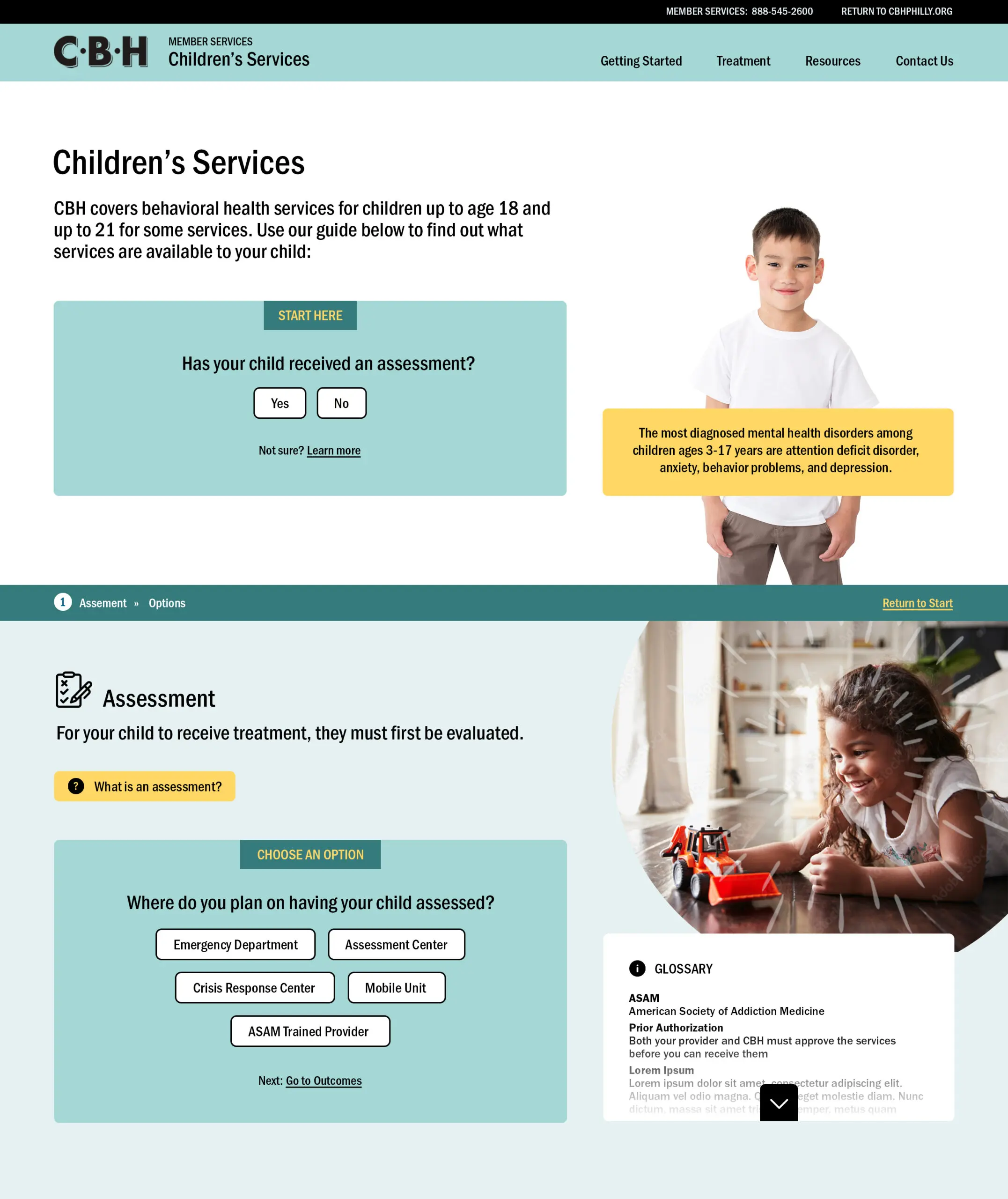
A mockup for a future microsite focused on a different CBH member service. Future microsites would feature unique color palettes but share content modules, layouts, and resources.
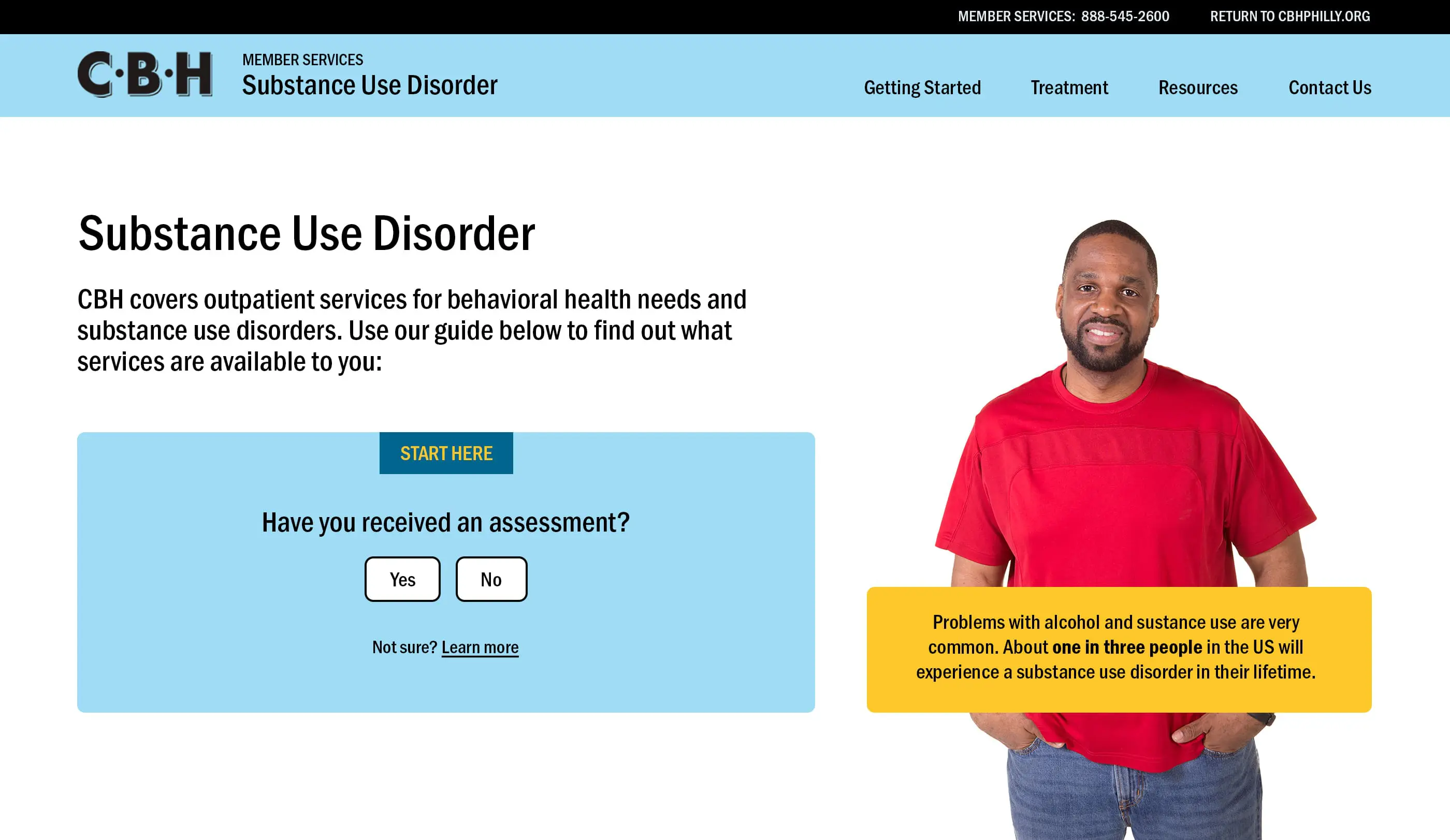
Early design concepts reflected the original user journey flow which required users to specify whether they were assessed or not. This approach evolved into the final concept which allows users to choose any area of microsite content they wish.
Delivering Accessible Content
The process to receive treatment can be quite involved and time consuming. CBH members do not have access to an online portal to request services. The Member Journey is meant to walk members through to next steps through clear messaging and an effective user interface—eliminating unnecessary steps or content.
Audience Considerations
CBH members may lack digital literacy, access to high-quality devices, and high-speed internet networks. With these limitations in mind, the CBH Member Experiences team took the opportunity to revise the text while the design elements evolved. A major emphasis was placed on language, leading to an exploration of both formal and informal tones of copy.
language interpretation requests by CBH Member in 2023
Language Diversity
Philadelphia is one of the most diverse metropolitan areas in the United States. According to Google Analytics findings, the website is accessed primarily by English-speaking users. Based on insights from Google Analytics, the majority of the site’s visitors are English speakers. That said, there’s a significant number of users from diverse linguistic backgrounds, including Spanish, Chinese, Russian, French, Portuguese, Ukrainian, and Arabic, who also visit the site regularly. In 2023, CBH provided interpretation services to its members for 104 different languages.
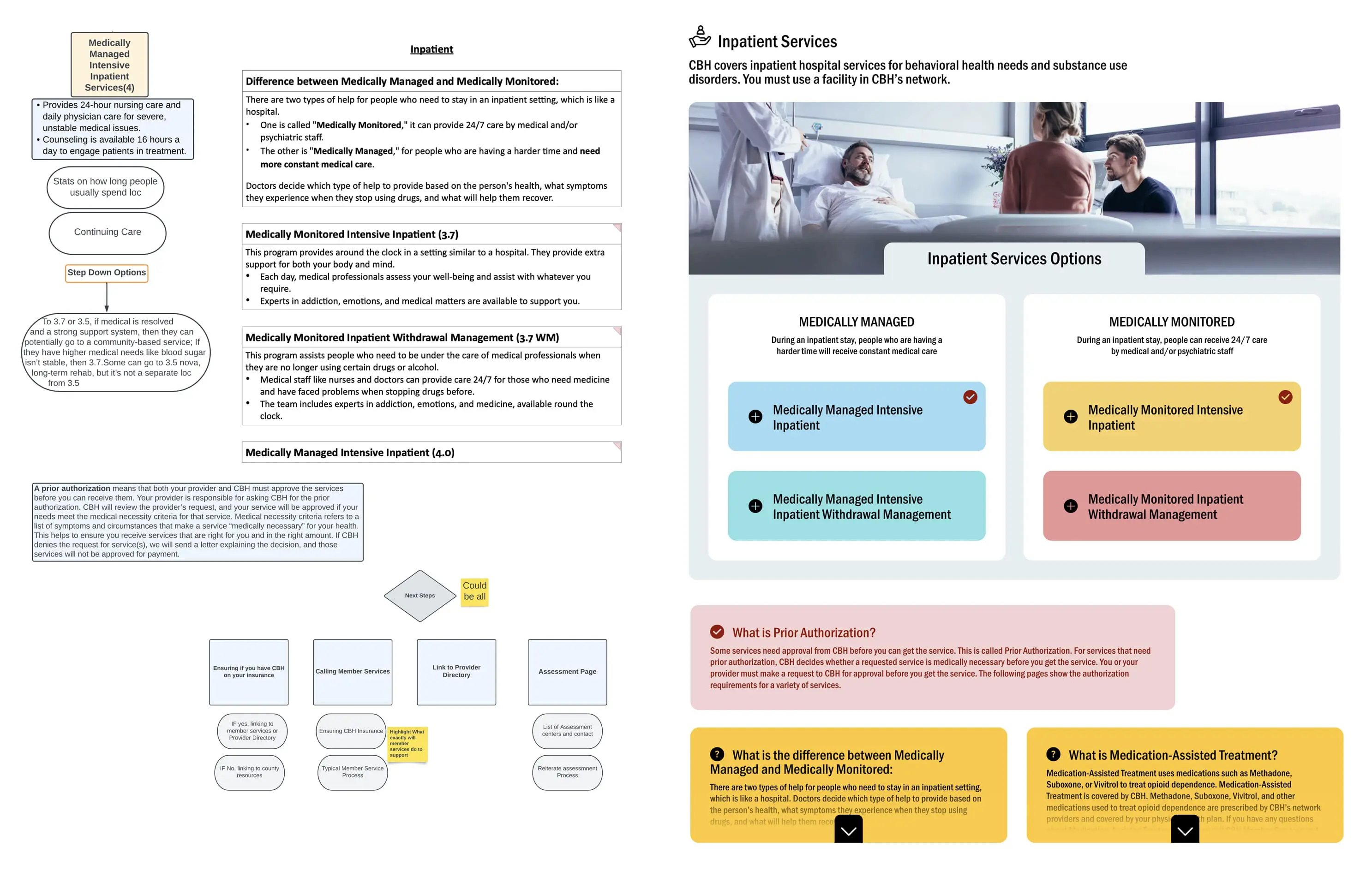
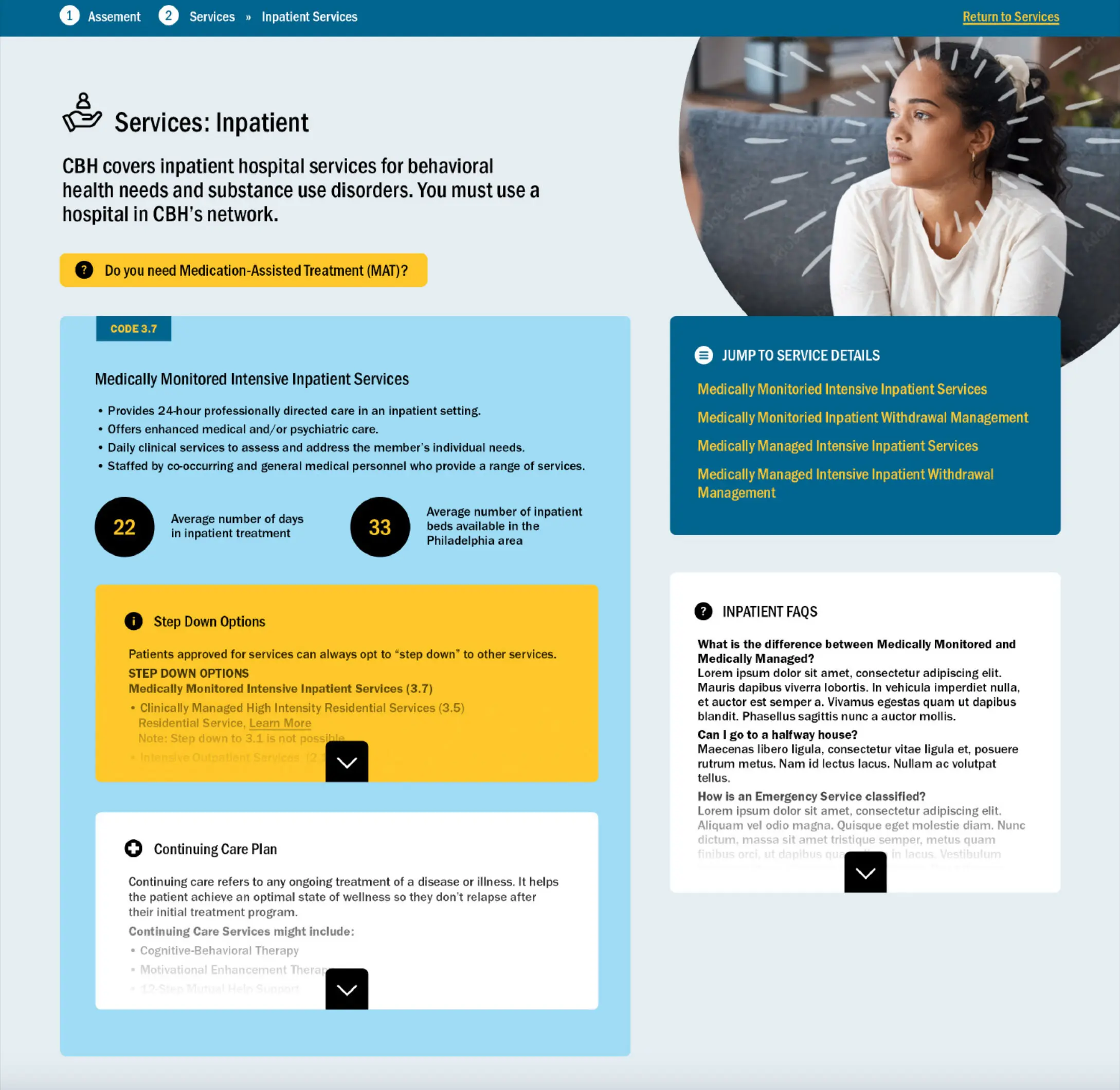
A side-by-side comparison of the original Inpatient Treatment Options user flow and the final design solution.
Effortless User Experience
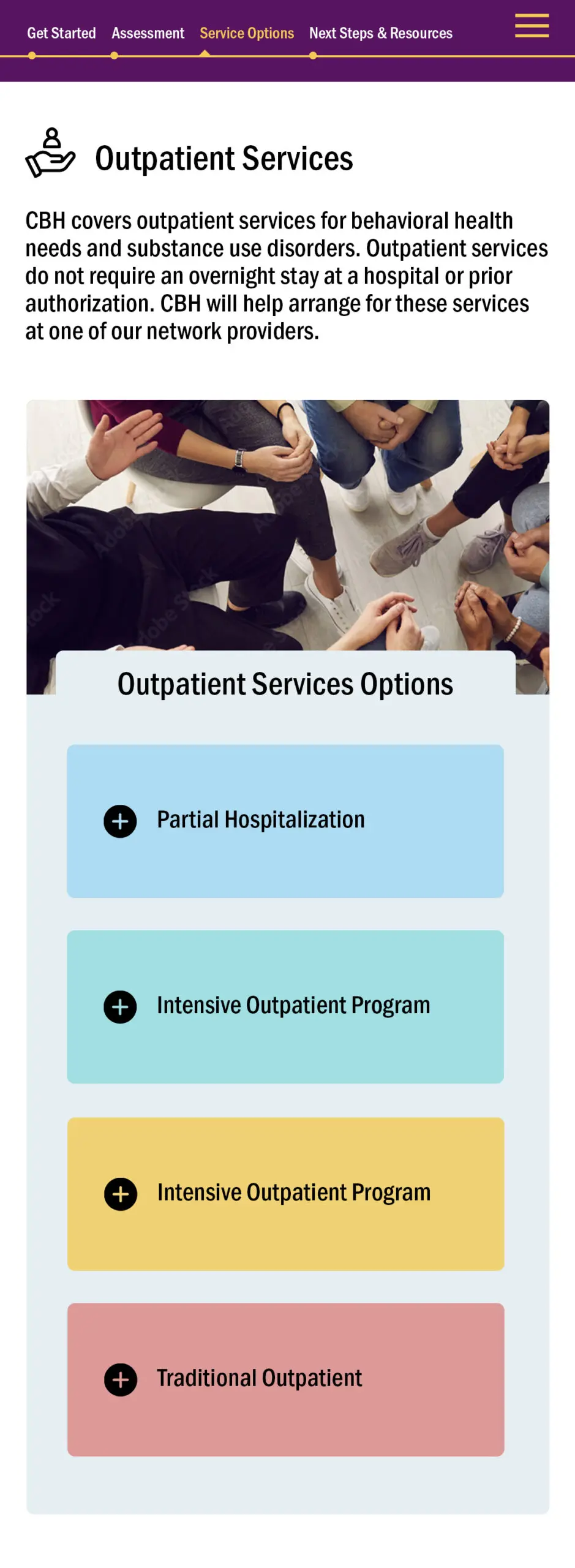
The CBH Member Services team worked diligently to edit and adapt the dense handbook materials for content modules in which users can easily access critical information. The final microsite features a range of collapsible modules, along with accordions, tooltips, and hover displays. This design system ensures a straightforward and user-friendly experience.

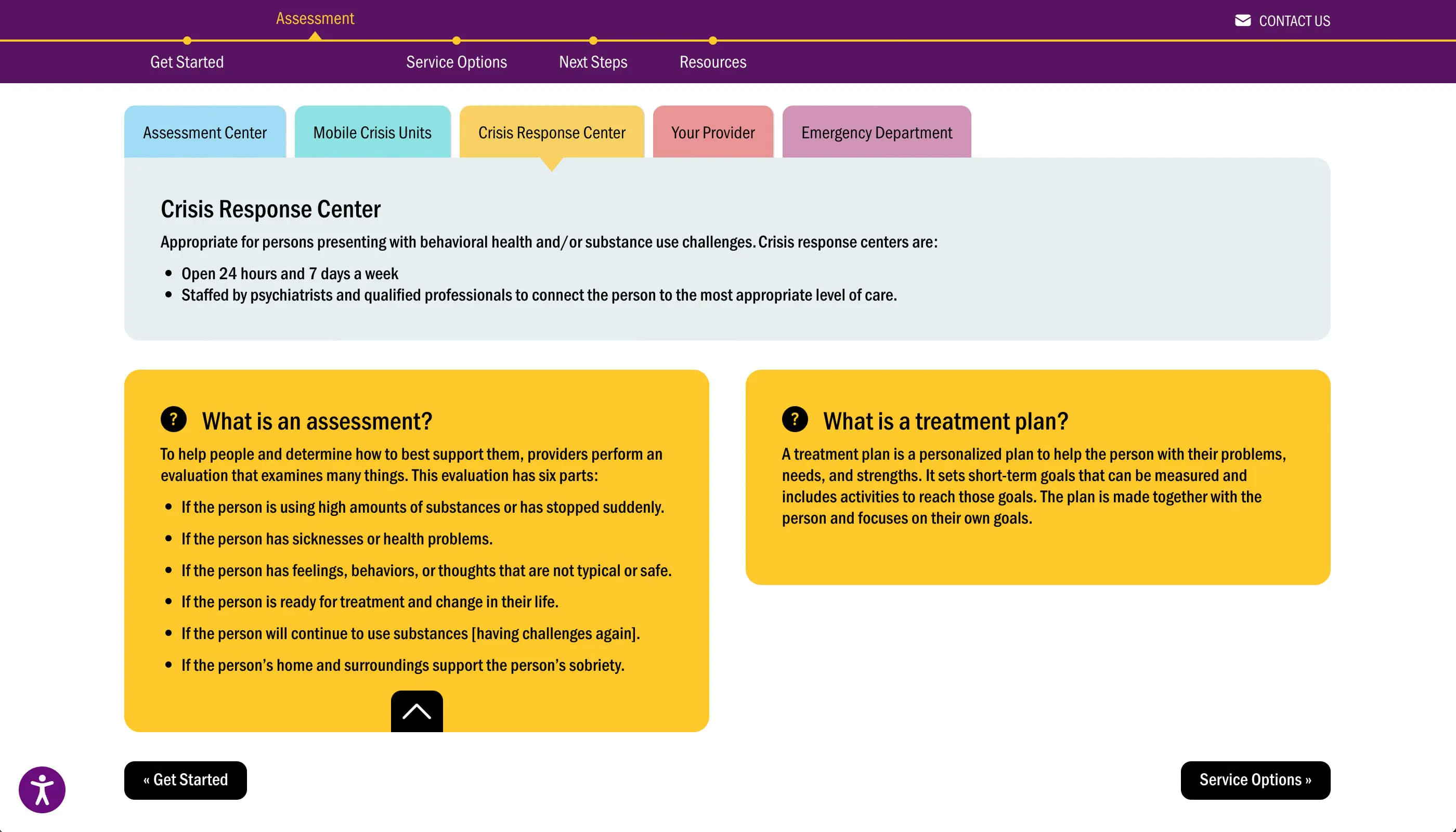
Designing an Easy-to-Use Web Interface with Customizable Options
Users consistently expressed frustration with the old website’s fractured and duplicative content structure. One user described the experience as going “down the rabbit hole.” While some content-related challenges fell outside our scope, Beth and her team delivered a streamlined, intuitive interface that improved navigation and usability.

The final design focused on creating a simple user experience where users must make selections before accessing further content. This approach helps to clear up confusion and reduces the chances of overwhelming users with complex treatment options.
%
of traffic on the CBH website is on mobile devices
Delivering a Seamless User Experience for Mobile Devices
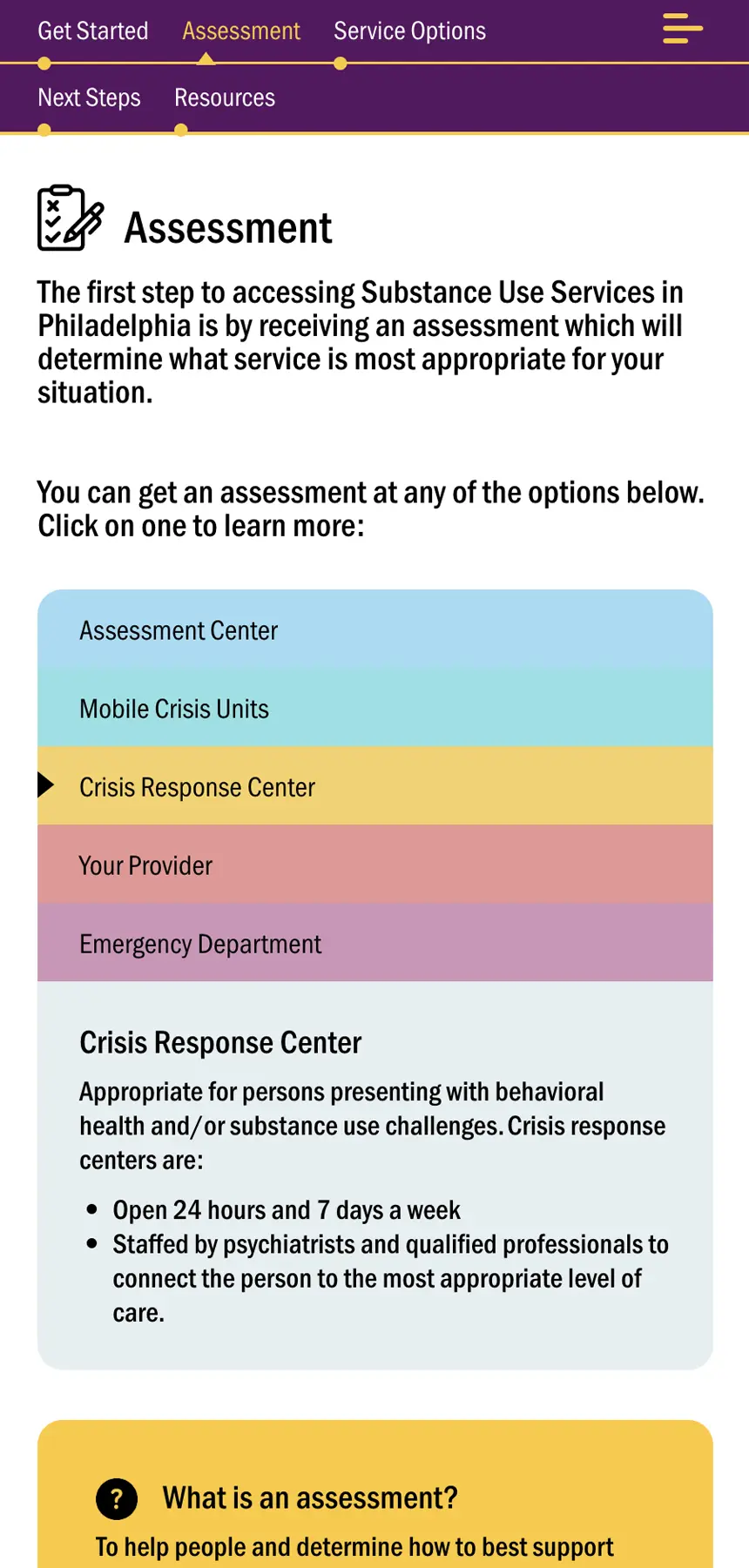
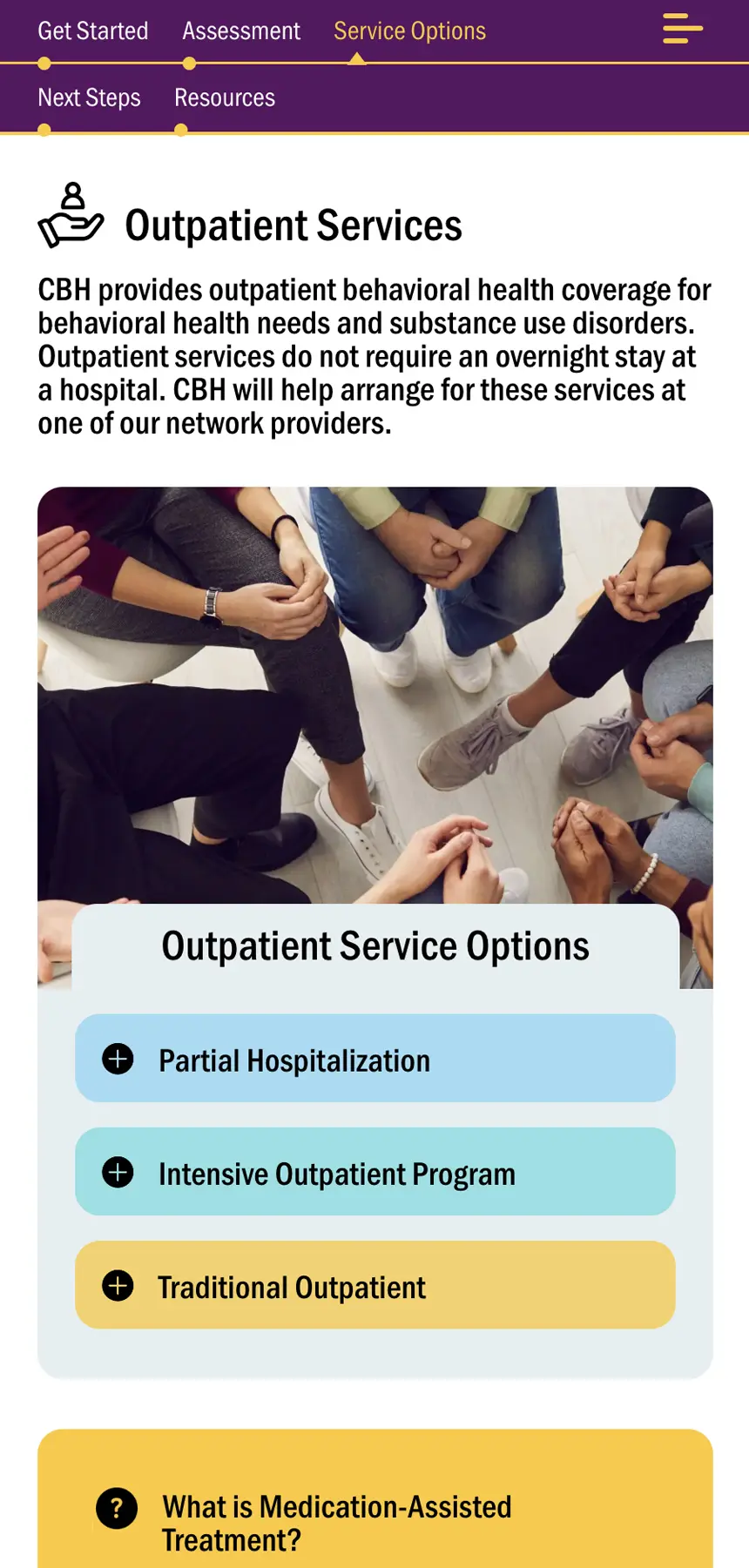
The fully-responsive, mobile experience of the Member Journey microsite was an integral component to the evolution of the design from the start of the project. The assumption was that most members would be accessing the Member Journey through mobile devices. So it was paramount that the on-screen navigation and collapsible content work as seamlessly on small screens as it does on larger desktop displays. The result is an effortless, speedy mobile experience that provides users with critical information about essential services.
2min 06sec
